Notes from the Bonn Zone: Days 9 and 10

IMG_1804
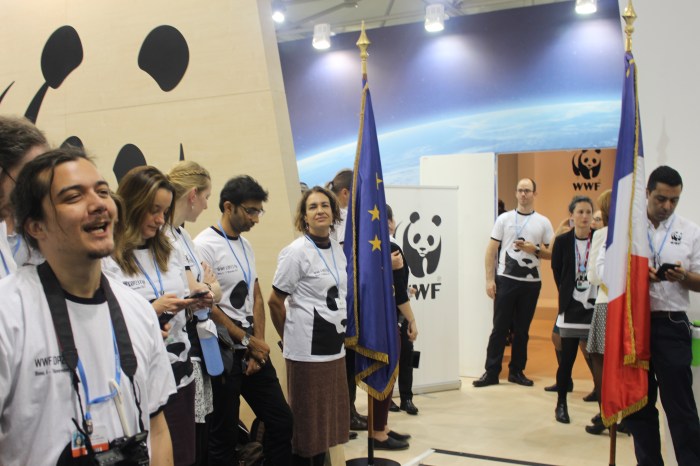
WWF waiting for Emmanuel Macron to visit the #PandaHub

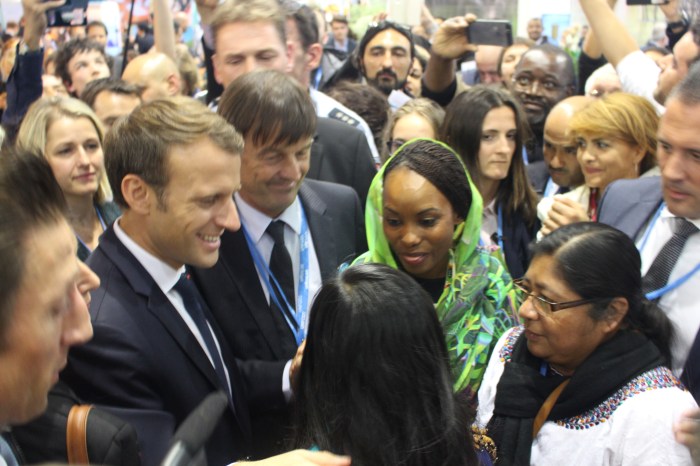
Days 9 and 10 of COP23 marked the arrival of several high profile figures such as German Chancellor Angela Merkel, French President Emmanuel Macron and UN Secretary General António Guterres as the conference nears its end.  

logo-ruta-rectangulo3

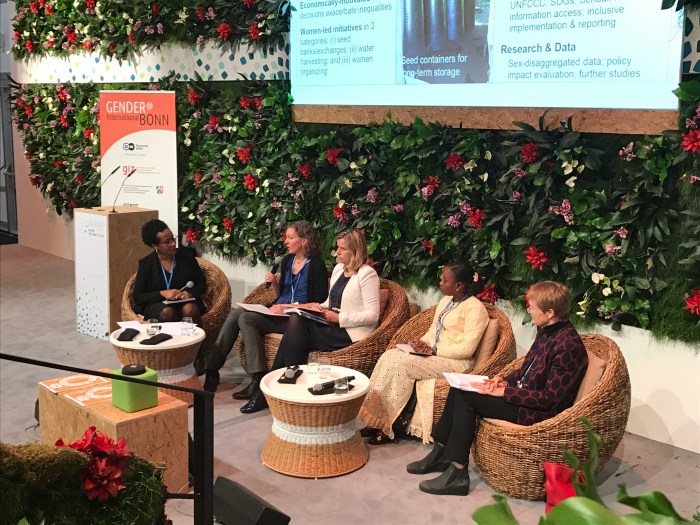
Tuesday afternoon featured a side event on Migration as a Climate Change Adaptation Strategy: A Gender Perspective at the Talanoa Space.  The event featured a panel of women speakers from the Women’s Environment and Development Organization (WEDO), International Organization for Migration (IOM), Asian Development Bank (ADB) and the Women’s Bureau of The Gambia.  Panelists spoke about the vulnerabilities women face from climate change and the connection with migration in their respective regions.

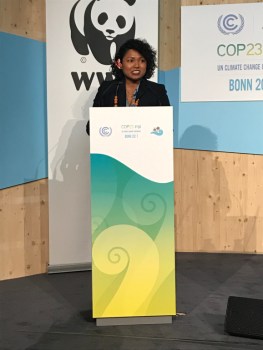
Ndey Fatou Jobe of the Women’s Bureau of The Gambia spoke about the role women play in her country’s economy, where they comprise 50 percent of the labor force and account for 40 percent of total agricultural production.  Women, she said, are often marginalized in the Gambian economy with limited access to credit.  She also pointed out how climate change has affected agricultural production and compounded struggles faced by women.  Ndey Fatou Jobe believes economic empowerment is the key to reducing women’s vulnerabilities faced by climate change.
IMG_3089
Panel discussion on Migration as a Climate Change Adaptation Strategy: A Gender Perspective

“When you are empowered economically, you become strong,” said Fatou Jobe.  “The most important part is to educate women and provide the necessary finance.”

Later in the afternoon, a group of Democratic and Republican U.S. officials from state governments committed to the Paris Agreement spoke on the importance of meeting the 2°C target, demonstrating that combatting climate change is not a partisan effort.  Democratic governors Kate Brown of Oregon and Jay Inslee of Washington delivered powerful speeches on the need for states to take a leading role in reducing greenhouse gas emissions, while a bipartisan panel of state officials from New York, Maryland, Colorado and Massachusetts reaffirmed this message.
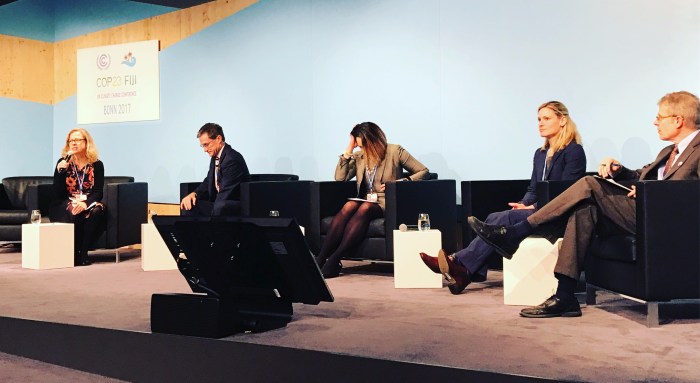
IMG_3109 (1)
Panel discussion on bipartisan efforts to combat climate change with state officials from Maryland, Colorado, Massachusetts and New York

“Donald Trump cannot stop us.  Let’s get on with whipping climate change.  It’s the destiny of our peoples,” said Inslee.

Jared Snyder, the Deputy Commissioner of Air Resources, Climate Change and Resources of New York, paraphrased a famous Mark Twain quote to describe New York’s response to the current political situation: “Support your country all the time. Support your government when it deserves it.” And she added,”On climate change, it is something that we feel differently from our government.”

French environmental minister  and renowned nature documentarian Nicolas Hulot arrived at the French Pavilion on Wednesday morning to talk about the work of the Climate Risk and Early Warning Systems (CREWS), an initiative developed by the French government, Global Facility for Disaster Risk Reduction from the World Bank, United Nations Office for Disaster Risk Reduction (UNISDR) and World Meteorological Organization.  The CREWS initiative is designed to increase the capacity for Multi-Hazard Early Warning Systems in vulnerable nations.   Hulot’s presentation was followed by two panels of representatives from participating countries and partnering organizations.

“In the face of climate change, Everyone must be warned well in advance in case of natural disaster. This is the minimum. This is the purpose of the CREWS system,” said Hulot.  

On Wednesday afternoon, the unofficial United States delegation hosted a Business Showcase series of panels, where corporate leaders discussed their initiatives to reduce greenhouse gas emissions at their companies.

Sheila Bonini, Senior Vice President of Private Sector Engagement at the World Wildlife Fund opened the seven-hour event with the following message: “The big changes will probably not be coming from government.  Business is our innovation center.”
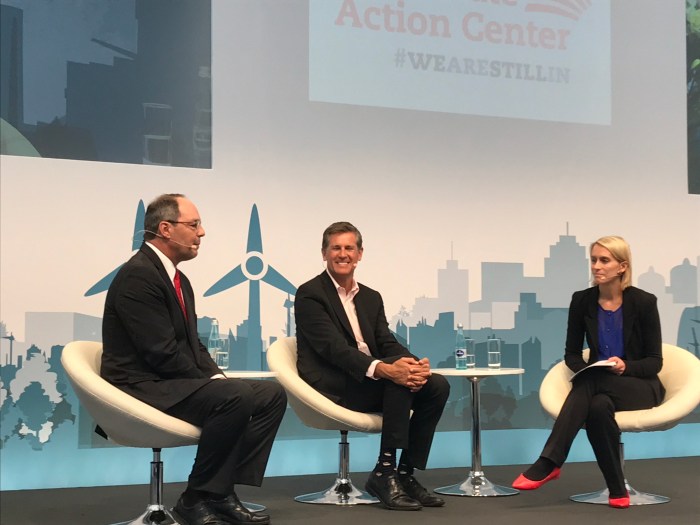
IMG_3155.JPG
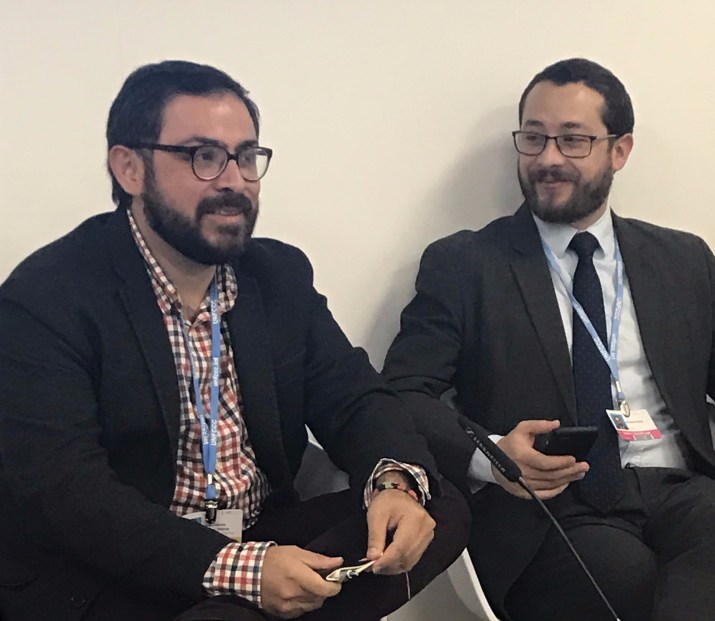
Jeff Moe (left) of Ingersoll Rand and Barry Parkin (center) of Mars, Inc. speak on their companies’ efforts to reduce greenhouse gas emissions

The first event, The Audacity of ‘Still In,’ featured representatives from Ingersoll Rand and Mars Inc., who spoke about their company’s investments in renewables and their efforts to transition to a low-carbon portfolio.

“I think the answer for us is very simple,” said Barry Parkin, Chief Sustainability Officer of Mars, Inc.  “We are going all out for clean energy.”

cropped-logo-ruta-20161.png

#SamNosCuenta: Notes from the Bonn Zone: Day 8

IMG_3036.JPG
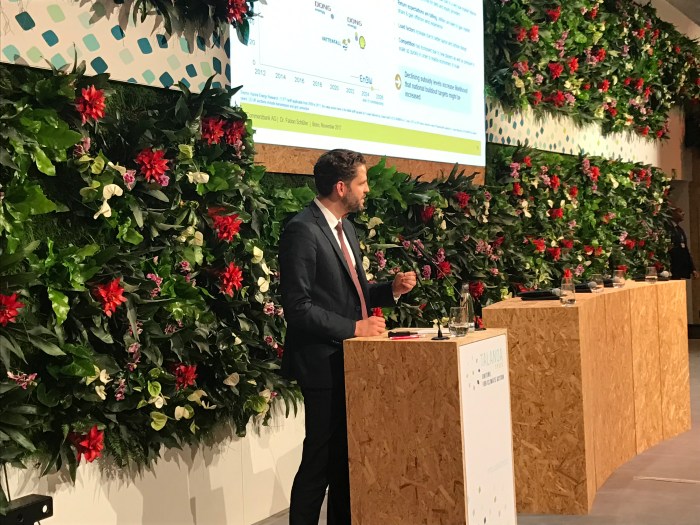
Marcus Pratsch of DZ BANK AG Speaking at the Talanoa Space

As negotiations resumed on Monday, there was palpable energy in the Bonn Zone that culminated in a spirited protest at a side event held by the United States on “The Role of Cleaner and More Efficient Fossil Fuels and Nuclear Power in Climate Mitigation.”

logo-ruta-rectangulo3

This event featured a panel of Trump administration members and the vice president of coal generation and emissions technologies at Peabody Energy, marking this the first time that the official United States delegation had spoken publicly at COP23. A huge line of people waiting to attend the event formed hours before the panel discussion started.  Shortly after the session began, a large group of protesters began singing an alternate version of Lee Greenwood’s “God Bless the USA”:

So you claim to be an American
But we see right through your greed;
It’s killing across the world
for that coal money.
And we proudly stand up and tell you to
Keep it in the ground.
The people of the world unite
and we are here to say.

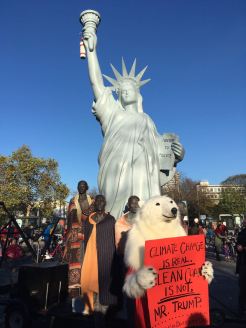
Protesters quickly exited the event and were joined by a large group of supporters in the Bonn Zone’s atrium, where the lively rally continued.  

Before this protest, numerous side events focusing on investments in renewable energy and other green technologies were held throughout the Bonn Zone.  An early morning session was held on Sustainable Investment, Private Capital and Climate Finance at the Talanoa Lodge, an exhibition area hosted by the German and Fijian governments built for civil society, industry, regions and municipalities.  Representatives for this event included DZ BANK AG, Commerzbank AG, the African Development Bank Group, Shell International, Ltd. and CDP, an international organization formerly known as the Carbon Disclosure Project that works with market forces.  Participants talked about the experience of mobilizing private capital to reduce greenhouse gas emissions, developing the global green bond market and utilizing the carbon capture and storage process.  

“Ultimately, everyone’s climate portfolios have to be resilient and below the two degree goal,” said Paul Simpson, the CEO of CDP.

IMG_3012
Paul Simpson speaking at the Sustainable Investment, Private Capital and Climate Finance side event.

Another side event on Reducing Livestock’s Long Shadow – Opportunities to Keep Warming Well Below 2⁰C was held later that morning.  The event began with a fiery speech by Ifat Zur of the Green Course, an environmental NGO based in Israel.  Zur blasted the livestock industry for being an inefficient and wasteful sector that is built upon the suffering of billions of animals.  Zur criticized the conference for its decision to offer meat options, pointing out the hypocrisy of a climate change conference serving carbon intensive food.

“Lucky for us, vegan food is delicious.  It is better for us,” said Zur.

DOgDfj5WsAEsJT2
Flyer for livestock side event.

Zur was followed by Dr. Helen Harwatt, formerly of Loma Linda University.  Harwatt also discussed reducing the footprint of the livestock sector, pointing out it contributes to 23 percent of total warming.

“The Paris Agreement will be increasingly difficult to meet if methane reductions are not also addressed strongly and rapidly,” said Harwatt.

In the afternoon, the French government held a side event on Engie, the French multinational electric utility company, and its role in helping reach the 2℃ target.  The panel featured two speakers, Paul Simons, the Deputy Executive Director of the International Energy Agency (IAEA), and Isabelle Kocher, the Chief Executive Officer of Engie.  The panelists discussed strategies undertaken by IAEA and Engie to reduce their carbon footprint.

“We have decided to be at the forefront of the way,” said Kocher.

Following the Engie panel discussion was a side event, Ecovillages for Climate Action: Opportunities for Europe,inspired by Asia, Africa and Latin America.  In this event, speakers working in these three regions of the world shared their stories of their work in investing in solar panels, green buildings and fertilizer technologies.

During the Ecovillages event, Thomas Duveau of Mobisol, a German business that works on installing solar energy systems in East Africa, spoke about  the Solar Revolution – the Contribution of Off Grid Solar to Electrifying Rural Africa.   Duveau stated that a $50 billion investment could provide electricity for the entire continent, pointing out that the only thing that is lacking for this is the investors.

logo-ruta-20161.png

#SamNosCuenta: Notes from the COP: Days 6 and 7

img_14431.jpg

As negotiators prepped for the second and final week of COP23, we, at La Ruta, have been covering the events taking place in the Climate Action and Bonn Zones.

logo-ruta-rectangulo3 

IMG_2995.JPG
Panelists for Business Case for Advancing Strong Climate Leadership and Policy in California event

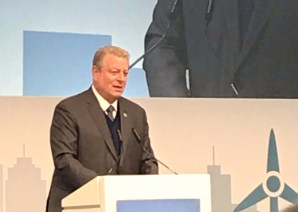
Saturday’s highlight was the arrival of several high profile figures to the United States Climate Action Zone.  Former Vice President Al Gore spoke on Maintaining U.S. Engagement in International Climate Finance. He was joined by Oregon Senator Jeff Merkley, Virginia Governor Terry McAuliffe, Senior Director for Climate Policy and Programs for New York City Dan Zarrilli, Davenport, Iowa Mayor Frank Klipsch and representatives from the private sector.  Participants reaffirmed their commitment to the $100 billion finance goal, despite the recent political developments in the United States, with Gore affirming that the “train left the station in Paris.”

IMG_2950
Former Vice President Al Gore speaking on Maintaining U.S. Engagement in International Climate Finance

“These fast, urbanizing, growing cities, particularly in the developing world, are seeing that the path toward more fossil fuel use is a dead end,” Gore said.  “As a result, investors all over the world are seeing this opportunity open up.  When you cross the threshold, where renewables are cheaper than fossil fuels, it is not a minor change…All over the developing world and the developed world, we are seeing investors poised to put vast new flows of capital into this sustainability revolution, which represents the biggest investment opportunity in the history of the world.”

In a panel discussion with McAuliffe, Merkley highlighted the corrupting role money has had on U.S. politics in relation to climate finance.

“We need to kick the Koch brothers out of every state,” said Merkley.

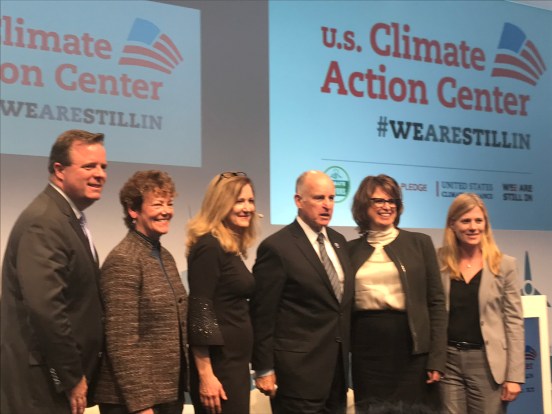
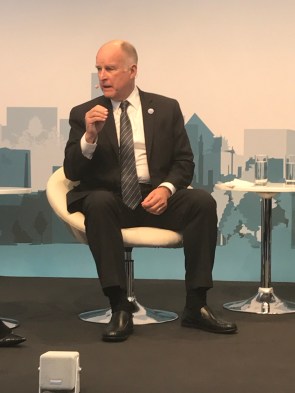
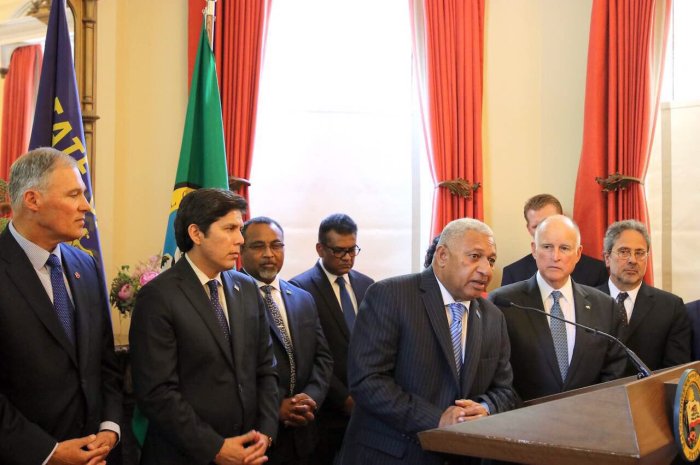
The session on climate finance was followed by a panel discussion on the Business Case for Advancing Strong Climate Leadership and Policy in California.  The panel participants were Californians committed to the Paris Agreement, including Governor Jerry Brown, Chief Operating Officer of Fetzer Vineyards Cindy DeVries, Steve Malnight, Senior Vice President for Strategy and Policy of Pacific Gas & Electric, and Kaiser Permanente Vice President and Environmental Stewardship Officer Kathy Gerwig.  They discussed the role of the private and public sectors in California in reducing greenhouse gas emissions.

“If you get Trump, you get more carbon reduction,” said Brown.  “He gives carbon denial a bad name.  He is the poster boy for climate denial.”

Brown went on to say: “A little bit of Trump will go a long way.  Too much will destroy us all.”

IMG_2982.JPG
Governor Jerry Brown speaking on Advancing Strong Climate Leadership and Policy in California 

Brown was highly critical of President Trump, but optimistic about how his presidency has mobilized environmentalists throughout the United States. 

On Sunday, members from La Ruta del Clima joined speakers and panelists for a side event with the International Union for the Conservation (IUCN) on Youth Voices.  Speakers from the Independent Association of Latin America and the Caribbean (AILAC), IUCN’s Environmental Law Center, International Forestry Students Association (IFSA), YMCA’s Resource Group on the Environment and others talked about their work related to climate change and perspectives on this year’s COP.


23416978_191028338121112_4444073227483873280_n.jpg
Ph. D. Student Pananya Larbprasertporn


“I do have hope. Or perhaps I am just forcing myself to have hope,” said Anna Pretel, an intern from the Environmental Law Center.   “But I feel that is just talking and talking in the negotiation and not action. If we want to solve this problem we have to act now. We are running out of time.”

logo-ruta-20161.png


#SamNosCuenta: Notes from the Bonn Zone – Days 4 and 5

23421686_2090469517855565_6077612370060902400_n.jpg

The COP23 negotiations are beginning to ramp up at the end of week one, with high profile figures such as former United States Vice President Al Gore, California Governor Jerry Brown, former New York City Mayor Michael Bloomberg and Oregon Senator Jeff Merkley arriving at the conference on Friday and Saturday.   With the climate talks in the Bula Zone intensifying, activity in the Bonn Zone and recently opened U.S. Action Climate Center continues to pick up speed.  

logo-ruta-rectangulo3

On Thursday, we had the opportunity to speak with Julio Cusurichi Palacios, the 2007 Goldman Environmental Prize winner from  Madre de Dios, Peru. Cusurichi sat down to talk about his mission here at COP23 and the effect that road construction as well as illicit logging and gold mining have had on his community. He also discussed his inspirational work that led to his award.

In the afternoon, the Adaptation Fund hosted a panel of speakers working to implement the fund’s projects in Fiji, Argentina, Ecuador, Tanzania, Antigua and Barbuda.  The Adaptation Fund, which finances projects to aid developing nations in adapting to climate change, is slated to have a prominent role in the finance negotiations over the next several days.  Participants discussed projects’ guiding principles, highlights and lessons learned for activities in their respective countries.

The International Union for the Conservation of Nature (IUCN) hosted a side event Friday morning: Strengthening Legal and Institutional Frameworks for Ecosystem-Based Adaptation, a process that helps people adapt to climate change through the conservation, sustainable management and restoration of natural ecosystems.   The event featured a variety of speakers and panelists from Costa Rica, Honduras, Ecuador and Seychelles, who discussed strategies, impediments and lessons learned implementing ecosystem-based adaptation through a legal lens.  Adrian Martinez, the President of La Ruta del Clima, was one of the featured panelists.  Martinez spoke about the role of public participation in climate change governance and implementing adaptation measures in Costa Rica.

img_2903-e1510327225809.jpg
Adrian Martinez of La Ruta del Clima speaking at IUCN side event

Friday’s highlight was Gore’s arrival at COP23.  Gore spoke to a packed audience at the Indonesian Pavilion, thanking them for “recreating the climate of Indonesia.”  Gore talked about the Climate Reality Project’s work in Indonesia and  thanked the 300 Indonesians who had gone through the Climate Reality Leadership Corps training.  Gore answered a question about nuclear energy development in Indonesia.  While stating that he was not entirely opposed to nuclear energy development, Gore lamented the direction nuclear energy development had taken globally and expressed pessimism about nuclear energy’s economic viability.

IMG_2939
Al Gore leaving the Indonesia pavilio

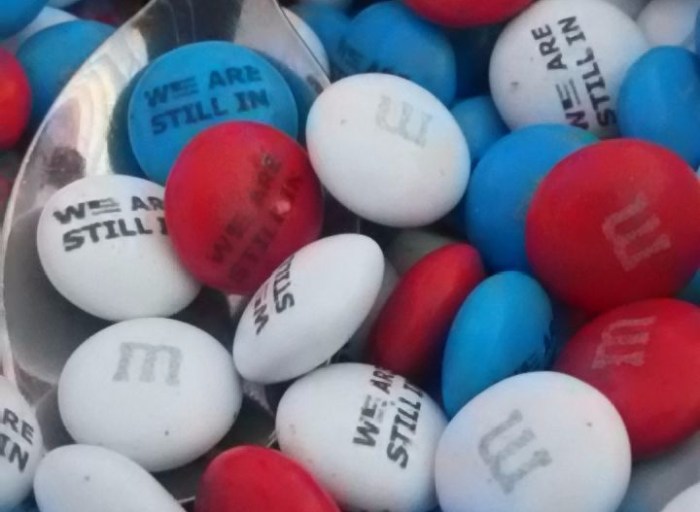
This week also marked the opening of the U.S. Action Climate Sector, a pavilion located adjacent to the Bula Zone, where university presidents, mayors, governors, and business leaders from the United States are scheduled to convene over the next several days.  At a We Are Still In Welcome Reception, the sector’s hosts reaffirmed their commitment to reduce greenhouse gas emissions, despite President Donald Trump’s decision to withdraw from the Paris Agreement.

“When Donald Trump stepped out, the American people stepped in,” said Anne Kelly, Director of Business for Innovative Climate and Energy Policy (BICEP) Ceres.

23348221_188456875045032_692768724377141248_n

cropped-logo-ruta-20161.png


Notes from the Bonn Zone: Days 2 and 3

img_0310-e1510243924559.jpg

The climate negotiations in Bonn are off to a promising start in advancing the implementation of the Paris Agreement, with Syria pledging to sign the Paris Agreeement on Tuesday.  Side events and exhibitions in the Bonn Zone on Tuesday and Wednesday highlighted the significance of what is at stake in these negotiations.  

logo-ruta-rectangulo3

China opened its Tuesday sessions in the Bonn Zone with a side event on China’s Energy Conservation and its Contribution to Addressing Climate Change.  This talk focused on China’s conservation and emission reduction efforts as well its conservation policies and measures.  Panelists discussed the link between energy efficiency and economic prosperity as well as China’s energy conservation plans for 2050.

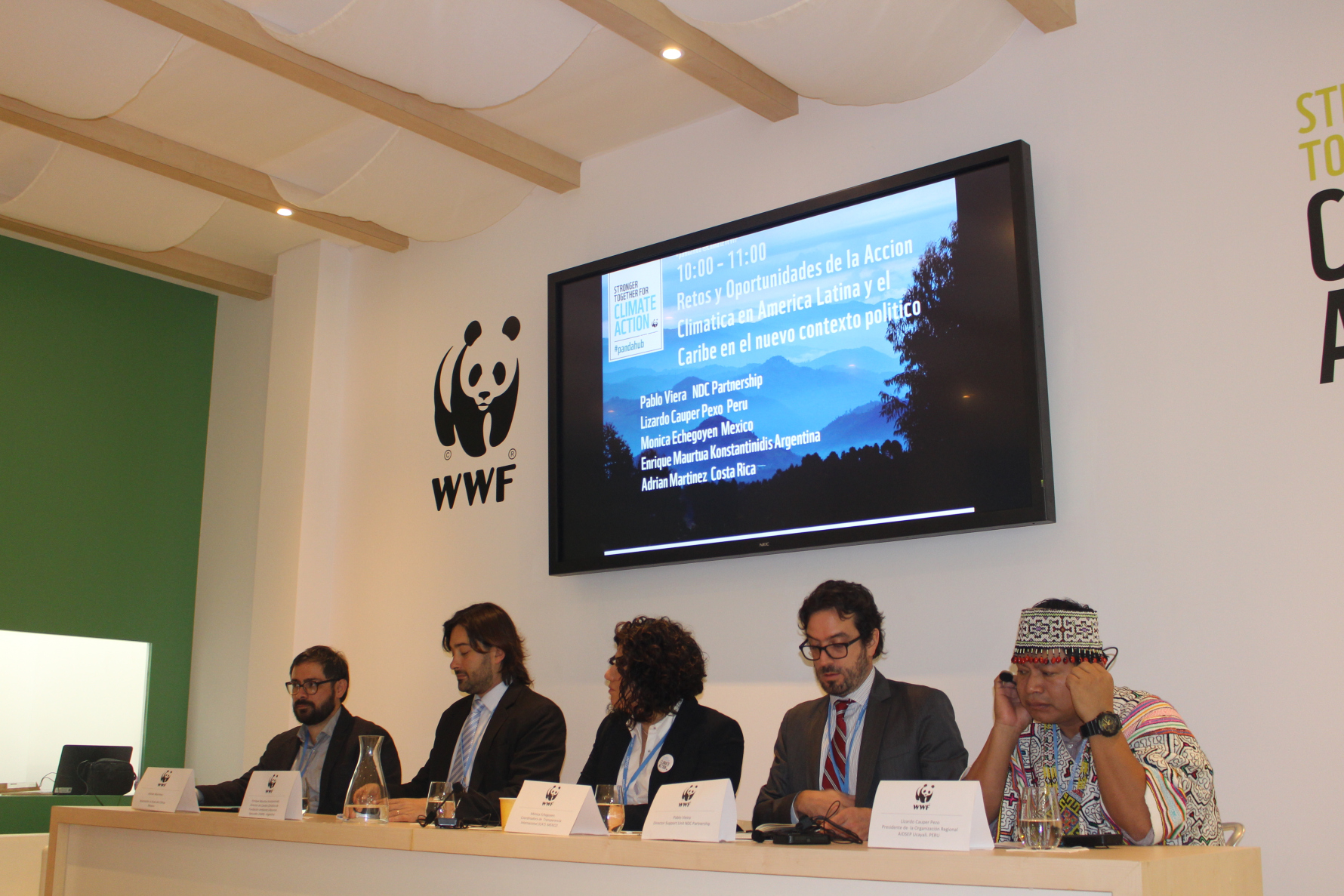
 At the same time, the World Wildlife Fund’s pavilion hosted a Spanish-speaking side event, Challenges and Opportunities for Climate Action in Latin America and the Caribbean in the New Political Context. Adrian Martinez of La Ruta del Clima served as the panel’s moderator while other panel members included representatives from Mexico, Colombia and Peru. 

Topics included how to involve local governments in climate action plans, the connection between climate change, development and education, the importance of civil society in climate change governance and the effect of political transitions on climate policy.  

“Climate change is not something that just affects us personally or physically,” said Anne Dunn of Fiji. “It’s something, that as islanders, as a Fijian, affects the very core of who we are.  It affects my identity.”

At the close of the meeting, Fiji’s Minister for Lands and Mineral Resources, Mereseini Vuniwaq said: “We have seen here today how six people from different countries in the Pacific, who did not even know each other a short time ago, can come together to produce beautiful and insightful videos, uniting as one voice. They are not video professionals and they are not professional entertainers.  They are six very intelligent young people with good ideas and generous hearts.  They are happy to devote themselves to something much larger than they are, much greater than all of us.”

Vuniwag went on to say: “I am thrilled to send these voices forth with a message to the world from the Pacific.  The crisis is now, the solution is now and the commitment must be now.”

On Wednesday afternoon, a panel of British scientists convened at the United Kingdom pavillion for the side event: Ocean Options: Climate Challenges and Science Responses for Seas and Society.  Panelists discussed the effects of ocean acidification, sea level rise, ocean temperature change and oxygen loss.

IMG_2806 (1)
Philip Williamson of the University of East Anglia discusses the effects of change in ocean temperature over the past several decades.

They also discussed their projects that included looking at offshore carbon dioxide storage deep below the seabed and studying blue carbon, the process by which plants move carbon dioxide into living biomass.

Late Wednesday afternoon, panelists from various NGOs throughout Latin America discussed their role in challenging the status quo and implementing innovative and sustainable technologies in their respective countries.


 One of the panelists was Luis Pérez, who works for Sailcargo Inc., a carbon negative transportation company based in Costa Rica.  

The Sailcargo Inc. team is developing a ship powered by wind and solar that seeks innovative and sustainable solutions to the shipping industry.  Pérez explained that Costa Rica, with its proximity to the Panama Canal, supply of sustainable wood resources and reputation as an eco-friendly country, serves as an optimal base for the company.

Notes from the Bonn Zone: Day 1 

img_0120

The United Nations Climate Change conference (COP23) kicked off yesterday in Bonn, with the island nation of Fiji presiding over the negotiations.

logo-ruta-rectangulo3.png

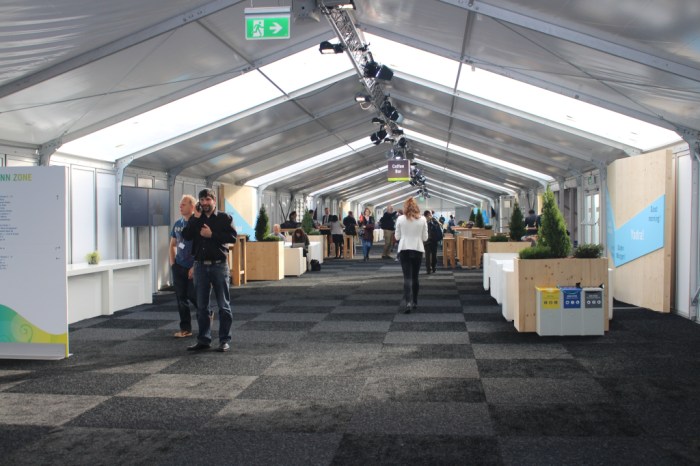
COP23 is divided into two zones: the Bonn Zone and the Bula Zone.  The Bula Zone is where the actual climate change negotiations are being held, while the Bonn Zone is holding an array of climate action events and exhibitions. 

This year, nations such as Fiji, France, India, Korea, Malaysia, Norway, Russia and the United Kingdom are hosting pavilions in the Bonn Zone, as well as international organizations and NGOs such as the World Bank, International Union for Conservation of Nature and the World Wildlife Fund.  

No where to be seen…

WhatsApp Image 2017-11-07 at 10.58.31 PMA United States pavilion was noticeably absent this year in COP23.  In these pavilions  countries and organizations present on issues related to what happens in the climate negotiations. Unlike what has been seen in the last summits this year there is no visible presence of the United States and leaves a certain vacuum in  COP23.

However, abandoned spaces are soon embraced by new actors such as China and other countries that fill these spaces assuming leadership.


COP23 the  Pacific Climate Change Conference

The island-nation of Fiji play a prominent role in the Bonn Zone.  The Fijian pavilion is hosting multiple side events and live Fijian music is heard at the conference throughout the day.

fiji

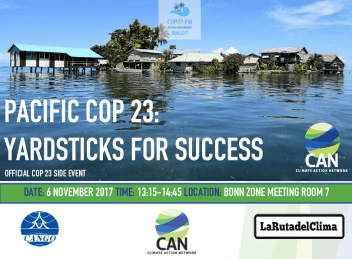
La Ruta del Clima was fortunate to co-host a side event on the first day of the conference, Pacific COP 23: Yardsticks for Success. 

La Ruta del Clima co-hosted COP23 Yardsticks for Success

invitation-jpg-social-media1-e1509556187939In addition to La Ruta del Clima, panel members included representatives from the Climate Action Network, World Resources Institute, and the Green Education Center. Topics covered were climate finance, public participation in climate governance and environmental education.  Panel members discussed their hopes for COP23, the link between access to climate funding for island nation and justice, key elements to progress at COP23 and the next steps for reaching the $100 billion goal set forth in the Copenhagen Accord and reaffirmed in the Paris Agreement. 
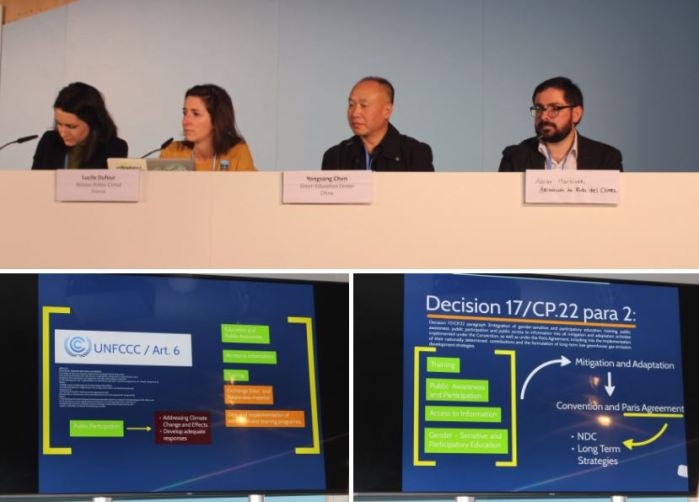
yarstick

Role of Women as Healers of the Ocean at the Frontlines of the Climate-Development-Nature Nexus.

Following the Yardsticks for Success meeting, I attended a second side event: Role of Women as Healers of the Ocean at the Frontlines of the Climate-Development-Nature Nexus. It was presented in English and, at times, Fijian by representatives from Fiji, Germany and the Netherlands.  The role different women play along the front lines of climate change was highlighted.  A community leader, professor and WWF representative were among those who discussed the importance of gender sensitivity in developing climate policy and the role of women in the community with respect to climate mitigation and adaptation. 

img_2686.jpg
Role of Women as Healers of the Ocean at the Frontlines of the Climate-Development-Nature Nexus.

“I ask that we come together in harmony.  One spirit. One heart,” said Penina Moce, a WWF Ocean Climate Witness from Kabara Island, a 30-square kilometer island in Fiji that has already been strongly impacted by climate change.  “We work together so that the future of our children and future generations can be restored.”

Carol Puha, the facilitator of this event, closed with a quote by German theologian Dietrich Bonhoeffer: “The person who loves their dream of community will destroy community, but the person who loves those around them will create community.”

cropped-logo-ruta-20161.png


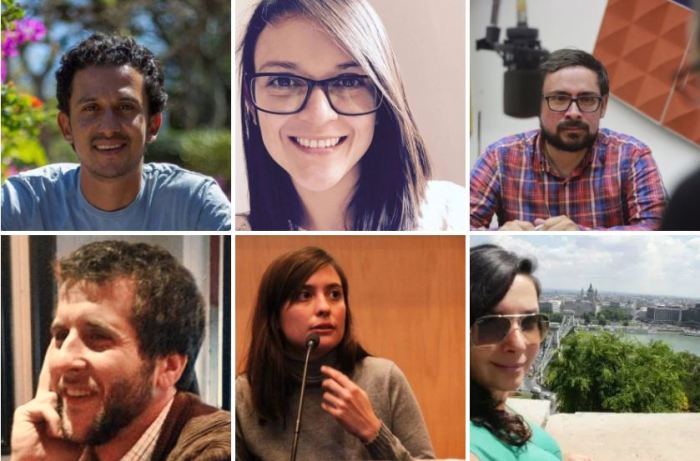
COP 23: Get to Know La Ruta del Clima team

GRUPO

For the fourth consecutive year, volunteers from La Ruta del Clima will be be attending the Conference of Parties (COP), from November 6 to 17, in Bonn.

logo-ruta-rectangulo3.png

At this year’s conference, we will be co-hosting side events on the role of youth and civil society in climate change governance.  Our team will be providing daily updates of the negotiations and COP-related events on our website and social media.  We will be interviewing  climate negotiators, NGOs and other key players from the COP.  Subscribe to our YouTube page to stay up to date with our interviews and daily video briefings during the conference.  

In addition, we will be providing updates on this year’s negotiations through our weekly radio program, Ojo al Clima, a joint production with the University of Costa Rica and LatinClima.  Tune in on Mondays at 8 a.m. on 101.9 FM.

The following members of La Ruta will be representing Bonn at this year’s conference:

img_0399
Adrián Martínez

Adrián is a Climate Policy Specialist and the President of La Ruta.   Adrián is passionate about working with young people in Latin America on climate change and sustainable development projects.  He works in environmental law, providing research on communal adaptation to climate change and promoting informed citizen participation.  Adrián has an M.A. in Environment, Development, and Peace from the University of Peace and a law degree from the University of Costa Rica.

Periodista Valeria Roman
Valeria Román

A journalist and youth rights activist, Valeria serves as the Vice President of La Ruta del Clima.  She is dedicated to communications work with NGOs with regards to sustainability and human rights issues.  Valeria currently lives in Mexico City, where she is pursuing a Master’s Degree in Communications at the Universidad Nacional Autónoma.

Rosa Vásquez Rodríguez
Rosa Vásquez

Rosa is an engineer and environmental consultant.  Rosa has extensive knowledge of environmental issues and the effects they have on vulnerable populations.  She has experience facilitating environmental management projects in the productive sector and has worked extensively on carbon neutrality initiatives.  Rosa’s work focuses on promoting citizen participation and creating cross-sectoral capacities to transition toward a sustainable and low emissions model.  Rosa is currently enrolled in a master’s program in Sustainable Urban Technologies at the University of Buenos Aires.

Msc. Mauricio Luna
Mauricio Luna

Mauricio is passionate about sustainable development, education, and climate change. He has extensive experience working with young people, both nationally and internationally, as well as with environmental NGOs, international volunteers, and educational institutions.  Mauricio holds a Master of Science in Environmental Studies from the University of Melbourne and a B.A. in International Relations from the Universidad Internacional de las Américas.

Ing. Cindy Umaña
Cindy Umaña

An environmental engineer and consultant,  Cindy also serves as La Ruta’s Treasurer.  Her interests lie in process innovation and modification to promote sustainability in the context of climate change.  She is committed to encouraging young people to propose, educate and develop alternative low-emission models. She works as a consultant on emissions measurement, environmental impact, and sustainable engineering. Living in Nice, France, Cindy is pursuing a Master of Science in Engineering for Smart Cities at the Institut Méditerranéen du Risque, de l’Environnement et du Développement Durable de Université Côte d’Azur.

MA. Sam Goodman
Sam Goodman

Sam has over ten years of experience working on climate change, natural resource management and sustainable development issues in Costa Rica, the United States, and Peru.  Prior to joining La Ruta in January 2017, Sam has worked with the Department of Interior and Peace Corps for the United States government, as well as the Ministry of Agriculture and Livestock in Costa Rica.  He holds a dual Master’s Degree in Natural Resources and Sustainable Development from American University and the University of Peace.

For more information, please visit our website at http://www.rutadelclima.org.  You can also follow our activities at COP23 through social media on Facebook, YouTube, Twitter and LinkedIn

cropped-logo-ruta-20161.png


COP23, Climate Finance and the Green Climate Fund

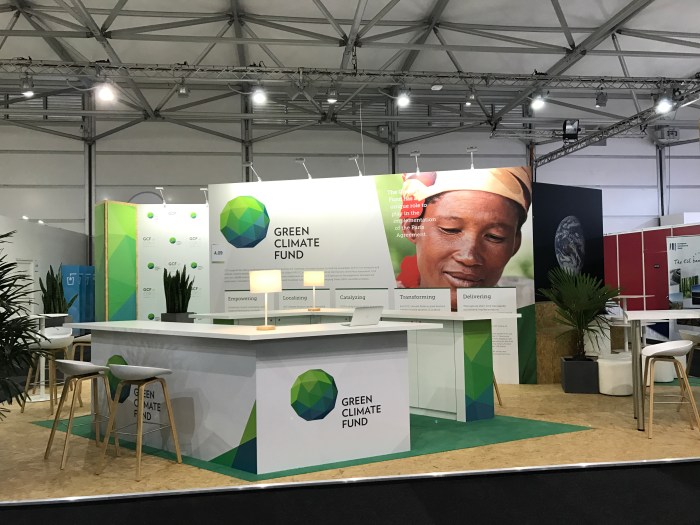
IMG_2669
Green Climate Fund Pavilion at COP23

The issue of climate finance is slated to take on a critical role at the 2017 UN Climate Change Conference (COP23) in Bonn this November and build upon progress made in previous negotiations.  COP23 President Frank Bainimarama, who is the Prime Minister of Fiji, has made access to climate finance a “key pillar” of his presidency.

Climate finance, in the context of international negotiations, dates back to the creation of the United Nations Framework Convention on Climate Change (UNFCCC) in 1992. It was agreed that developed nations should “take all practicable steps to promote, facilitate and finance, as appropriate, the transfer of, or access to, environmentally sound technologies and know-how to other Parties.”  The Kyoto Protocol advanced the issue of climate finance, by helping to establish the Adaptation Fund, which finances projects to aid developing nations in adapting to climate change.  

In recent years, climate finance has been at the forefront of climate negotiations.  The 2009 Copenhagen Accord calls for developed countries to mobilize $100 billion a year by 2020 to address the needs of developing countries.  The 2010 negotiations in Cancun lead to the creation of the Green Climate Fund, a fund for wealthier nations to assist developing nations in reducing their greenhouse gas emissions.  The Paris Agreement reaffirmed the $100 billion commitment set forth in Copenhagen.

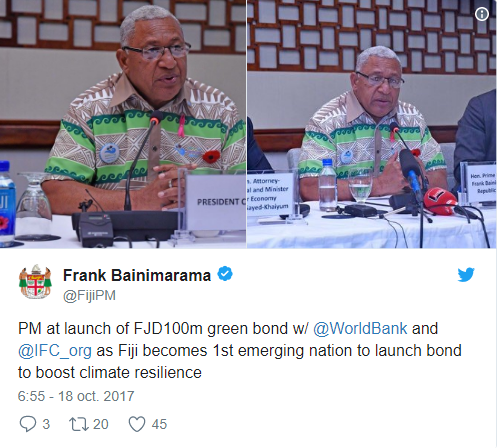
Leading up to this year’s convention, key announcements about climate finance have been made. On October 16, the Asian Development Bank announced it would increase its financing to over $500 million between 2017 and 2020, more than doubling its previous totals. The following day, Fiji, this year’s host nation, became the first developing country to issue a green bond to finance climate change mitigation and adaption in this vulnerable island nation.

fiji


Joe Thwaites, an Associate in the Sustainable Finance Center at World Resources Institute, told of the significant role that climate finance is expected to play in the upcoming conference.

This is the first COP hosted by a small island developing state, and with the impacts of climate change becoming clearer, a key emphasis of the negotiations is likely to be on support for the poorest and most vulnerable countries,” said Thwaites. “There is likely to be a strong focus on adaptation finance; funding to help countries deal with the impacts of climate change.”

Thwaites went on to say: “There are several concrete agenda items where this is likely to come up. Countries are considering how the Adaptation Fund will serve the Paris Agreement. In addition, they will review progress toward developed countries’ goal of mobilizing $100 billion a year for developing countries by 2020, and will provide guidance on how funding, particularly for adaptation, can be scaled up toward this. Negotiators will also be discussing how countries should account for, report, and review climate finance provided and received, and how developing countries can articulate their future support needs. Every year COP also provides guidance to the Global Environment Facility and Green Climate Fund.”

While there is a great deal of optimism coming into the conference, this has been somewhat marred by President Donald Trump’s decision to withdraw from the Paris Agreement and his attacks on climate finance.  In announcing his decision in a statement filled with half-truths and factual inaccuracies,  Trump blasted the “so-called Green Climate Fund” as a “scheme to redistribute wealth out of the United States.”

Since Trump’s decision came on the heels of a $500 million installment to the Green Climate Fund by President Barack Obama, there was considerable concern that the goal of investing $100 billion annually for mitigation and adaptation for developing countries could be jeopardized.  Still, the rest of the international community is poised to move ahead this month.

“The situation in the United States is obviously worrisome,” said Donovan Escalante, a Senior Analyst at the Climate Policy Initiative.  “However, I do not think it is sufficient to overcome the progress that has been made in the last decade to combat climate change.  We have seen enormous progress in reducing the cost of renewable energy, increasing energy efficiency and creating the political will to resolve the issue of climate change.”

The shift in policy by the Trump Administration has in many ways emboldened the international community as well as many local and state governments in the United States in the months leading up to Bonn.

In the wake of Trump’s announced withdrawal from the Paris Agreement, 14 U.S. states and over 500 cities have committed to adopt, honor and uphold the Agreement’s climate goals,” said Thwaites. “Several cities and states have expressed interest in a collective effort to contribute to international climate funding. Other countries are also standing firm and delivering on their commitments to the GCF. So even if the U.S. federal government is withdrawing, there remains momentum behind the GCF and climate action more broadly.”

cropped-logo-ruta-20161.png


Voreqe Bainimarama, Fiji and the Road to COP 23

logo-ruta-rectangulo3.png

The 23rd Conference of the Parties (COP23) to the United Nations Framework Convention on Climate Change (UNFCC) will put a spotlight on developing nations vulnerable to climate change, with the island nation of Fiji presiding over it.  

This November’s conference will be held in Bonn, Germany, because Fiji, a nation with less than a million people, lacks the facilities to host the conference.

As a nation comprised of over 300 islands and 500 islets, Fiji is among the Small Island Developing States (SIDS) threatened by sea level rise.  It has already suffered considerably from the effects of climate change, with satellite data showing an average sea level rise of 6 millimeters per year since 1993.  The government has already begun to relocate citizens impacted by saltwater intrusion.


Fiji has long been a staunch proponent for international cooperation efforts to combat climate change.  With unanimous approval from its parliament, Fiji was the first nation to ratify the Paris Agreement. The island nation has been a leading advocate for limiting global temperature rise to 1.5℃, rather than the current 2℃ cap agreed upon in Paris.

Even with per capita carbon dioxide emissions in the United States nearly 10 times that of Fiji, the island-nation is committed to reducing its carbon footprint through an ambitious Green Growth Plan.  Fiji, which already generates over 60 percent of its total electricity from renewable energy, has pledged that its electricity sector will become 100 percent dependent on renewables by 2030.  

Although the United States’ decision to leave the Paris Agreement has threatened to derail the momentum going into this year’s conference in Bonn, nations around the world are preparing to build on the progress made in the recent COPs in Paris and Marrakesh.   Fiji’s Prime Minister Voreqe Bainimarama offered a strong condemnation of President Donald Trump’s withdrawal and reaffirmed his commitment to advance the implementation of the Paris Agreement.  In a statement following Trump’s decision, Bainimarama said:  

As incoming COP President, I reaffirm that I will do everything possible to continue to forge a grand coalition that will accelerate the momentum that has continued since the Paris Agreement, embracing governments, civil society, the private sector and millions of ordinary men and women around the world. I am also convinced that the United States government will eventually rejoin our struggle because the scientific evidence of man-made climate change is well understood. The issue is settled, and the impacts are obvious, and humankind ignores these facts at its peril.


Under Bainimarama’s leadership, this year’s climate conference is poised to advance the work of the UNFCC and fulfill Fiji’s vision for COP 23. At a time when the international community is in need of strong climate leadership, Fiji is ready to inject a sense of urgency and optimism into the upcoming climate negotiations and infuse this conference with what Bainimarama called the Fijian spirit of “inclusiveness, friendliness and solidarity.”

The Bold Climate Agenda of Jeremy Corbyn

logo-ruta-rectangulo3

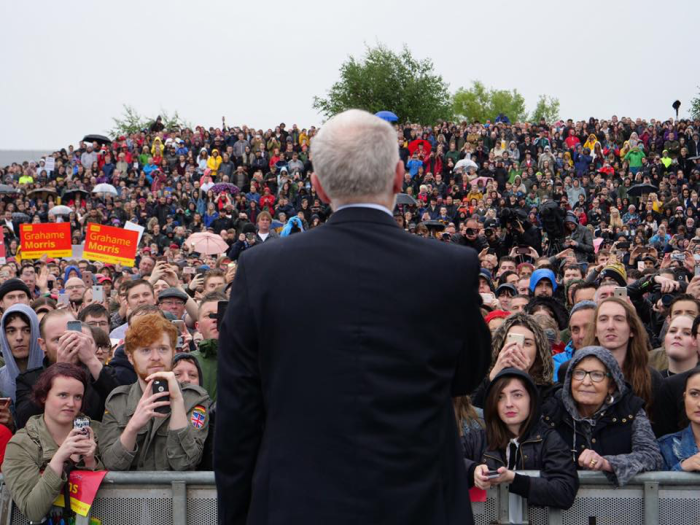
The better-than-expected results for Jeremy Corbyn and his Labour Party in the June 8 snap elections shocked the United Kingdom and the world. The election led to Prime Minister Theresa May and the Conservatives losing their majority in Parliament, forcing May to form a coalition with Northern Ireland’s Democratic Unionist Party, a group of extremists who once appointed a climate denier as environmental minister. Following the election, Corbyn and his party have continued to surge in the polls. The prospect of a Corbyn-led government seems increasingly likely.

corbyn (1)

The transformation of Corbyn from obscure backbencher to odds-on favorite to become prime minister should be a welcome change for environmentalists. Corbyn has called for keeping 80 percent of fossil fuels in the ground, promoting renewable energy development and championing community energy cooperatives. He has been a vocal proponent of the Paris Agreement and harshly criticized May for her tepid condemnation of President Donald Trump’s decision to leave the agreement.

The 2017 Labour Manifesto offers a radical alternative to the much-maligned Conservative Manifesto on key issues such as the economy, Brexit, health care, education and housing. As for the environment, Labour offers a bold vision for the future of the United Kingdom. The Manifesto reaffirms the party’s commitment to meeting the country’s climate change targets, promises to introduce a new Clean Air Act, calls for a ban on fracking and commits to generating 60 percent of the country’s energy from renewables by 2030.

The Conservative Manifesto offers a different take on climate action. Green Party co-leader Caroline Lucas described the Conservative Manifesto as an “absolute car crash for the environment”. While the manifesto emphasizes the importance of climate leadership and renewable energy development, the document lacks vision on critical issues such as air pollution and fossil fuel extraction. Unlike the Labour manifesto, it devotes an entire section to developing the shale gas industry in the United Kingdom, drawing on the natural gas boom in the United States as a model.

With Corbyn’s fortunes on the rise, the Labour Party is ready to lead the United Kingdom in transitioning to a low-carbon economy. In an era when climate leadership is needed more than ever, Labour offers a welcome change from May’s weak leadership.

cropped-logo-ruta-20161.png