Notes from the Bonn Zone: Days 2 and 3

img_0310-e1510243924559.jpg

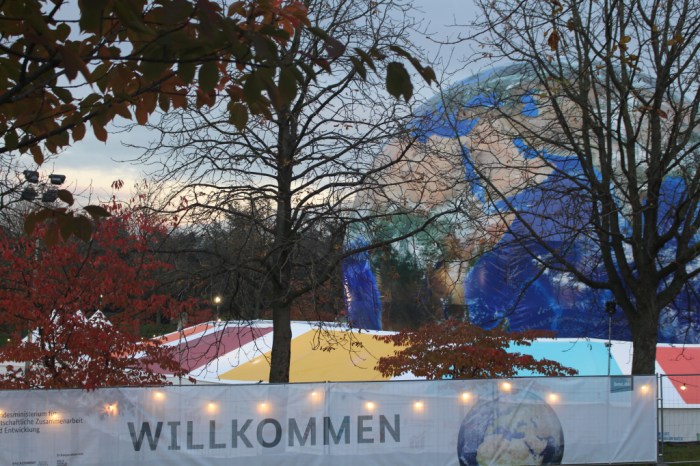
The climate negotiations in Bonn are off to a promising start in advancing the implementation of the Paris Agreement, with Syria pledging to sign the Paris Agreeement on Tuesday.  Side events and exhibitions in the Bonn Zone on Tuesday and Wednesday highlighted the significance of what is at stake in these negotiations.  

logo-ruta-rectangulo3

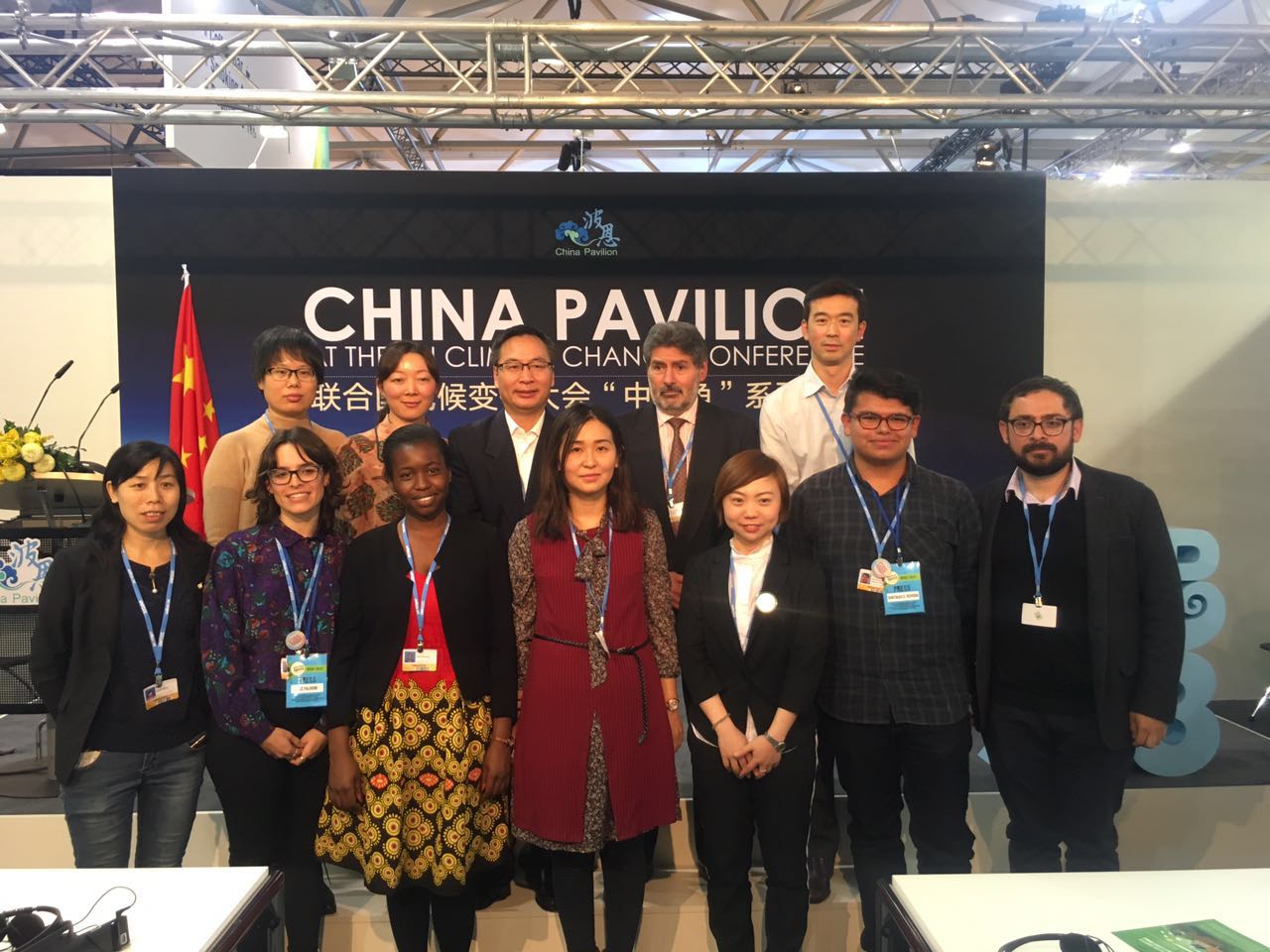
China opened its Tuesday sessions in the Bonn Zone with a side event on China’s Energy Conservation and its Contribution to Addressing Climate Change.  This talk focused on China’s conservation and emission reduction efforts as well its conservation policies and measures.  Panelists discussed the link between energy efficiency and economic prosperity as well as China’s energy conservation plans for 2050.
 At the same time, the World Wildlife Fund’s pavilion hosted a Spanish-speaking side event, Challenges and Opportunities for Climate Action in Latin America and the Caribbean in the New Political Context. Adrian Martinez of La Ruta del Clima served as the panel’s moderator while other panel members included representatives from Mexico, Colombia and Peru. 
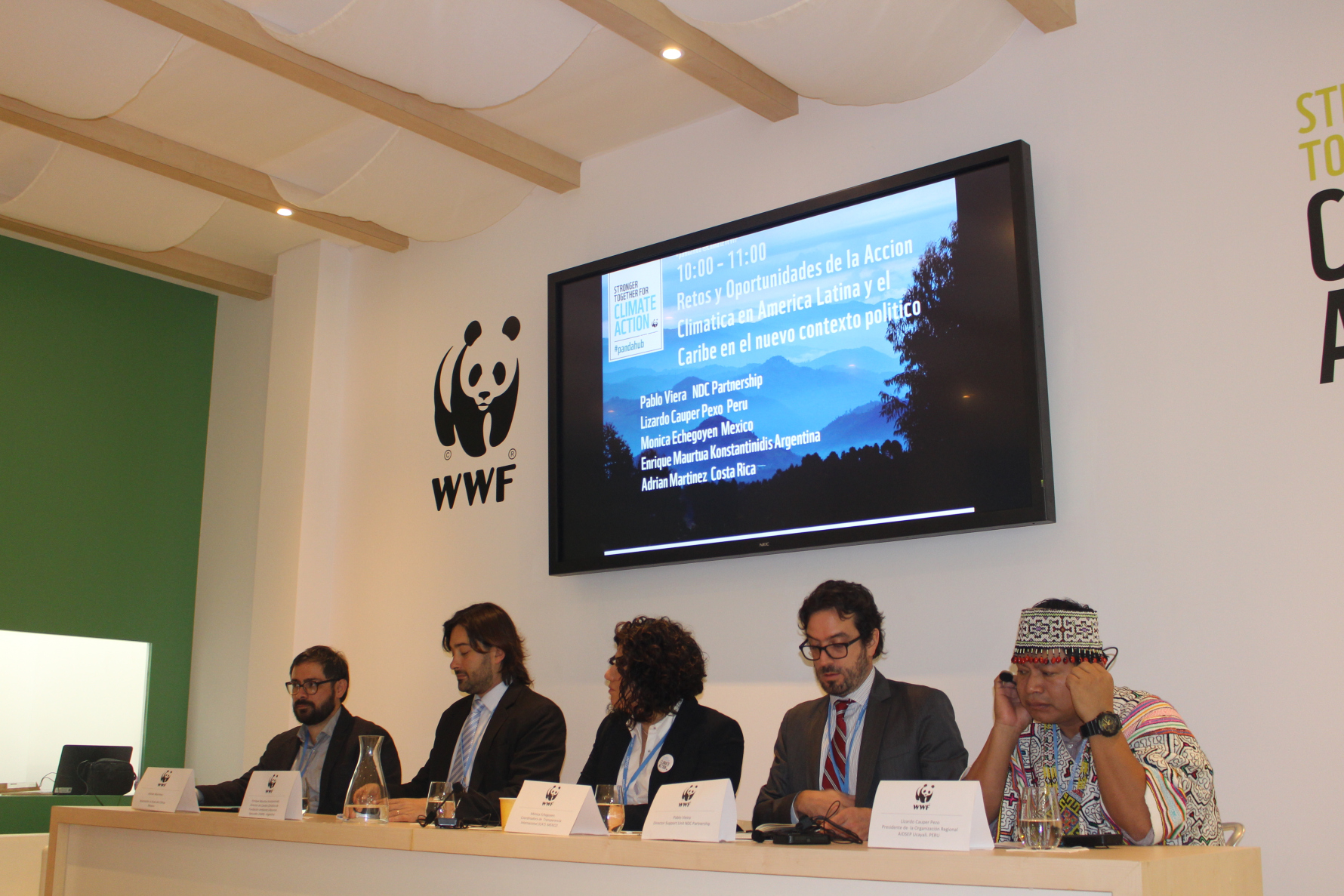
Topics included how to involve local governments in climate action plans, the connection between climate change, development and education, the importance of civil society in climate change governance and the effect of political transitions on climate policy.  

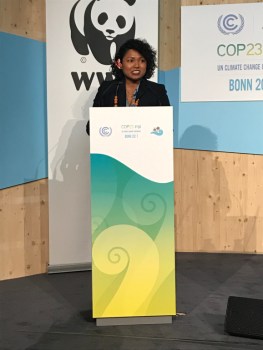
“Climate change is not something that just affects us personally or physically,” said Anne Dunn of Fiji. “It’s something, that as islanders, as a Fijian, affects the very core of who we are.  It affects my identity.”

At the close of the meeting, Fiji’s Minister for Lands and Mineral Resources, Mereseini Vuniwaq said: “We have seen here today how six people from different countries in the Pacific, who did not even know each other a short time ago, can come together to produce beautiful and insightful videos, uniting as one voice. They are not video professionals and they are not professional entertainers.  They are six very intelligent young people with good ideas and generous hearts.  They are happy to devote themselves to something much larger than they are, much greater than all of us.”

Vuniwag went on to say: “I am thrilled to send these voices forth with a message to the world from the Pacific.  The crisis is now, the solution is now and the commitment must be now.”

On Wednesday afternoon, a panel of British scientists convened at the United Kingdom pavillion for the side event: Ocean Options: Climate Challenges and Science Responses for Seas and Society.  Panelists discussed the effects of ocean acidification, sea level rise, ocean temperature change and oxygen loss.
IMG_2806 (1)
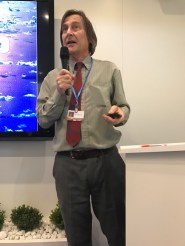
Philip Williamson of the University of East Anglia discusses the effects of change in ocean temperature over the past several decades.

They also discussed their projects that included looking at offshore carbon dioxide storage deep below the seabed and studying blue carbon, the process by which plants move carbon dioxide into living biomass.

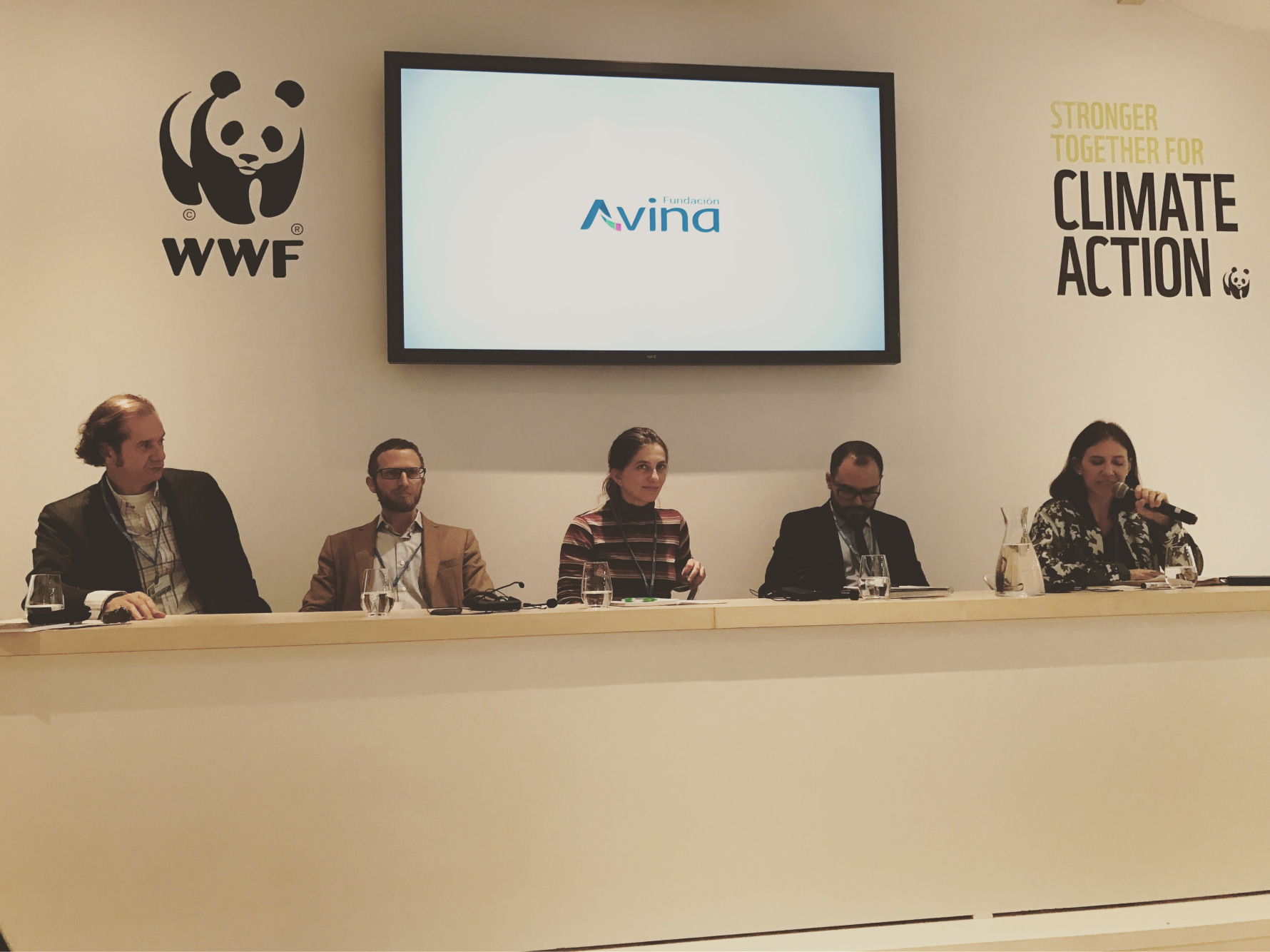
Late Wednesday afternoon, panelists from various NGOs throughout Latin America discussed their role in challenging the status quo and implementing innovative and sustainable technologies in their respective countries.


 One of the panelists was Luis Pérez, who works for Sailcargo Inc., a carbon negative transportation company based in Costa Rica.  
The Sailcargo Inc. team is developing a ship powered by wind and solar that seeks innovative and sustainable solutions to the shipping industry.  Pérez explained that Costa Rica, with its proximity to the Panama Canal, supply of sustainable wood resources and reputation as an eco-friendly country, serves as an optimal base for the company.


Notes from the Bonn Zone: Day 1 

img_0120

The United Nations Climate Change conference (COP23) kicked off yesterday in Bonn, with the island nation of Fiji presiding over the negotiations.

logo-ruta-rectangulo3.png

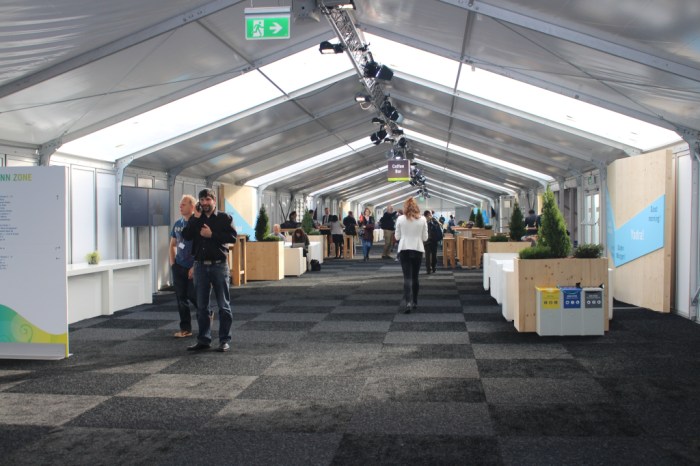
COP23 is divided into two zones: the Bonn Zone and the Bula Zone.  The Bula Zone is where the actual climate change negotiations are being held, while the Bonn Zone is holding an array of climate action events and exhibitions. 

This year, nations such as Fiji, France, India, Korea, Malaysia, Norway, Russia and the United Kingdom are hosting pavilions in the Bonn Zone, as well as international organizations and NGOs such as the World Bank, International Union for Conservation of Nature and the World Wildlife Fund.  

No where to be seen…

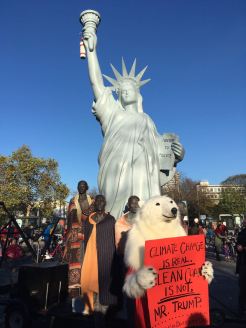
WhatsApp Image 2017-11-07 at 10.58.31 PMA United States pavilion was noticeably absent this year in COP23.  In these pavilions  countries and organizations present on issues related to what happens in the climate negotiations. Unlike what has been seen in the last summits this year there is no visible presence of the United States and leaves a certain vacuum in  COP23.

However, abandoned spaces are soon embraced by new actors such as China and other countries that fill these spaces assuming leadership.


COP23 the  Pacific Climate Change Conference

The island-nation of Fiji play a prominent role in the Bonn Zone.  The Fijian pavilion is hosting multiple side events and live Fijian music is heard at the conference throughout the day.

fiji

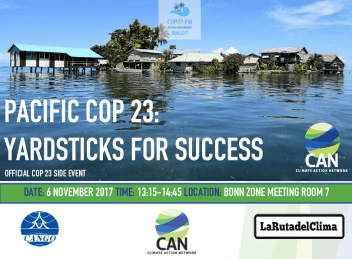
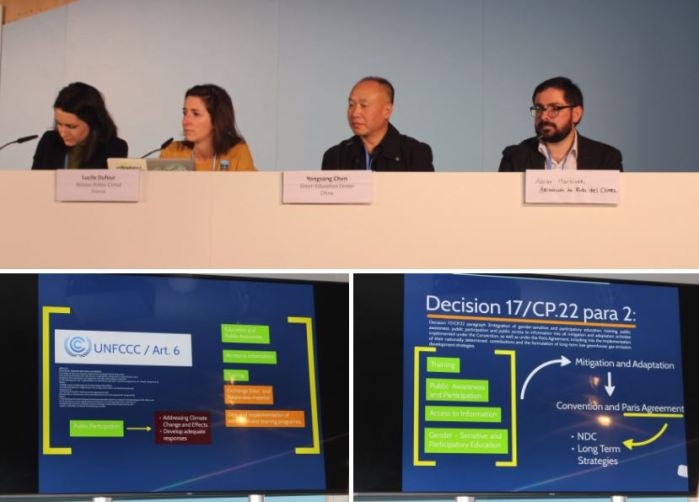
La Ruta del Clima was fortunate to co-host a side event on the first day of the conference, Pacific COP 23: Yardsticks for Success. 

La Ruta del Clima co-hosted COP23 Yardsticks for Success

invitation-jpg-social-media1-e1509556187939In addition to La Ruta del Clima, panel members included representatives from the Climate Action Network, World Resources Institute, and the Green Education Center. Topics covered were climate finance, public participation in climate governance and environmental education.  Panel members discussed their hopes for COP23, the link between access to climate funding for island nation and justice, key elements to progress at COP23 and the next steps for reaching the $100 billion goal set forth in the Copenhagen Accord and reaffirmed in the Paris Agreement. 
yarstick

Role of Women as Healers of the Ocean at the Frontlines of the Climate-Development-Nature Nexus.

Following the Yardsticks for Success meeting, I attended a second side event: Role of Women as Healers of the Ocean at the Frontlines of the Climate-Development-Nature Nexus. It was presented in English and, at times, Fijian by representatives from Fiji, Germany and the Netherlands.  The role different women play along the front lines of climate change was highlighted.  A community leader, professor and WWF representative were among those who discussed the importance of gender sensitivity in developing climate policy and the role of women in the community with respect to climate mitigation and adaptation. 

img_2686.jpg
Role of Women as Healers of the Ocean at the Frontlines of the Climate-Development-Nature Nexus.

“I ask that we come together in harmony.  One spirit. One heart,” said Penina Moce, a WWF Ocean Climate Witness from Kabara Island, a 30-square kilometer island in Fiji that has already been strongly impacted by climate change.  “We work together so that the future of our children and future generations can be restored.”

Carol Puha, the facilitator of this event, closed with a quote by German theologian Dietrich Bonhoeffer: “The person who loves their dream of community will destroy community, but the person who loves those around them will create community.”

cropped-logo-ruta-20161.png


COP 23: Get to Know La Ruta del Clima team

GRUPO

For the fourth consecutive year, volunteers from La Ruta del Clima will be be attending the Conference of Parties (COP), from November 6 to 17, in Bonn.

logo-ruta-rectangulo3.png

At this year’s conference, we will be co-hosting side events on the role of youth and civil society in climate change governance.  Our team will be providing daily updates of the negotiations and COP-related events on our website and social media.  We will be interviewing  climate negotiators, NGOs and other key players from the COP.  Subscribe to our YouTube page to stay up to date with our interviews and daily video briefings during the conference.  

In addition, we will be providing updates on this year’s negotiations through our weekly radio program, Ojo al Clima, a joint production with the University of Costa Rica and LatinClima.  Tune in on Mondays at 8 a.m. on 101.9 FM.

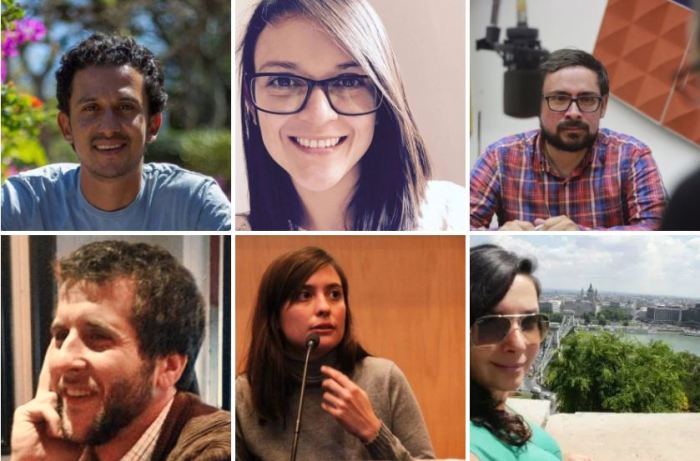
The following members of La Ruta will be representing Bonn at this year’s conference:

img_0399
Adrián Martínez

Adrián is a Climate Policy Specialist and the President of La Ruta.   Adrián is passionate about working with young people in Latin America on climate change and sustainable development projects.  He works in environmental law, providing research on communal adaptation to climate change and promoting informed citizen participation.  Adrián has an M.A. in Environment, Development, and Peace from the University of Peace and a law degree from the University of Costa Rica.

Periodista Valeria Roman
Valeria Román

A journalist and youth rights activist, Valeria serves as the Vice President of La Ruta del Clima.  She is dedicated to communications work with NGOs with regards to sustainability and human rights issues.  Valeria currently lives in Mexico City, where she is pursuing a Master’s Degree in Communications at the Universidad Nacional Autónoma.

Rosa Vásquez Rodríguez
Rosa Vásquez

Rosa is an engineer and environmental consultant.  Rosa has extensive knowledge of environmental issues and the effects they have on vulnerable populations.  She has experience facilitating environmental management projects in the productive sector and has worked extensively on carbon neutrality initiatives.  Rosa’s work focuses on promoting citizen participation and creating cross-sectoral capacities to transition toward a sustainable and low emissions model.  Rosa is currently enrolled in a master’s program in Sustainable Urban Technologies at the University of Buenos Aires.

Msc. Mauricio Luna
Mauricio Luna

Mauricio is passionate about sustainable development, education, and climate change. He has extensive experience working with young people, both nationally and internationally, as well as with environmental NGOs, international volunteers, and educational institutions.  Mauricio holds a Master of Science in Environmental Studies from the University of Melbourne and a B.A. in International Relations from the Universidad Internacional de las Américas.

Ing. Cindy Umaña
Cindy Umaña

An environmental engineer and consultant,  Cindy also serves as La Ruta’s Treasurer.  Her interests lie in process innovation and modification to promote sustainability in the context of climate change.  She is committed to encouraging young people to propose, educate and develop alternative low-emission models. She works as a consultant on emissions measurement, environmental impact, and sustainable engineering. Living in Nice, France, Cindy is pursuing a Master of Science in Engineering for Smart Cities at the Institut Méditerranéen du Risque, de l’Environnement et du Développement Durable de Université Côte d’Azur.

MA. Sam Goodman
Sam Goodman

Sam has over ten years of experience working on climate change, natural resource management and sustainable development issues in Costa Rica, the United States, and Peru.  Prior to joining La Ruta in January 2017, Sam has worked with the Department of Interior and Peace Corps for the United States government, as well as the Ministry of Agriculture and Livestock in Costa Rica.  He holds a dual Master’s Degree in Natural Resources and Sustainable Development from American University and the University of Peace.

For more information, please visit our website at http://www.rutadelclima.org.  You can also follow our activities at COP23 through social media on Facebook, YouTube, Twitter and LinkedIn

cropped-logo-ruta-20161.png


COP23, Climate Finance and the Green Climate Fund

IMG_2669
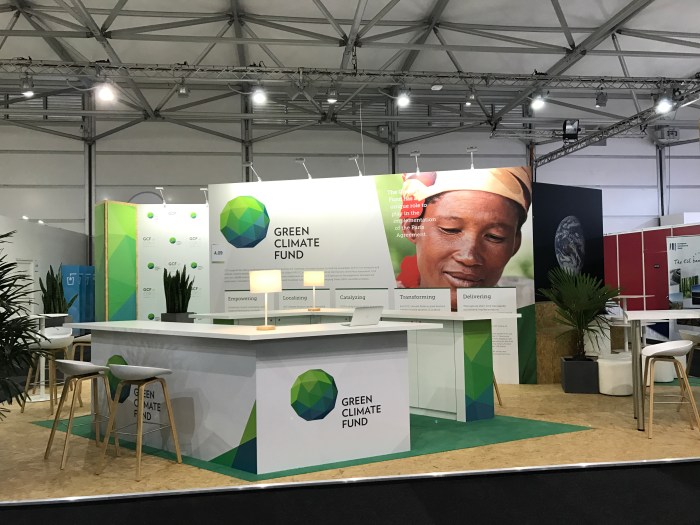
Green Climate Fund Pavilion at COP23

The issue of climate finance is slated to take on a critical role at the 2017 UN Climate Change Conference (COP23) in Bonn this November and build upon progress made in previous negotiations.  COP23 President Frank Bainimarama, who is the Prime Minister of Fiji, has made access to climate finance a “key pillar” of his presidency.

Climate finance, in the context of international negotiations, dates back to the creation of the United Nations Framework Convention on Climate Change (UNFCCC) in 1992. It was agreed that developed nations should “take all practicable steps to promote, facilitate and finance, as appropriate, the transfer of, or access to, environmentally sound technologies and know-how to other Parties.”  The Kyoto Protocol advanced the issue of climate finance, by helping to establish the Adaptation Fund, which finances projects to aid developing nations in adapting to climate change.  

In recent years, climate finance has been at the forefront of climate negotiations.  The 2009 Copenhagen Accord calls for developed countries to mobilize $100 billion a year by 2020 to address the needs of developing countries.  The 2010 negotiations in Cancun lead to the creation of the Green Climate Fund, a fund for wealthier nations to assist developing nations in reducing their greenhouse gas emissions.  The Paris Agreement reaffirmed the $100 billion commitment set forth in Copenhagen.

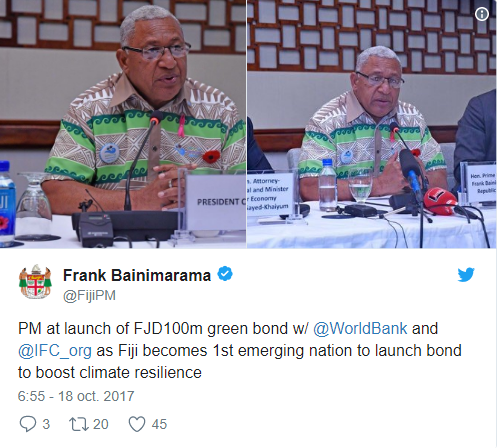
Leading up to this year’s convention, key announcements about climate finance have been made. On October 16, the Asian Development Bank announced it would increase its financing to over $500 million between 2017 and 2020, more than doubling its previous totals. The following day, Fiji, this year’s host nation, became the first developing country to issue a green bond to finance climate change mitigation and adaption in this vulnerable island nation.

fiji


Joe Thwaites, an Associate in the Sustainable Finance Center at World Resources Institute, told of the significant role that climate finance is expected to play in the upcoming conference.

This is the first COP hosted by a small island developing state, and with the impacts of climate change becoming clearer, a key emphasis of the negotiations is likely to be on support for the poorest and most vulnerable countries,” said Thwaites. “There is likely to be a strong focus on adaptation finance; funding to help countries deal with the impacts of climate change.”

Thwaites went on to say: “There are several concrete agenda items where this is likely to come up. Countries are considering how the Adaptation Fund will serve the Paris Agreement. In addition, they will review progress toward developed countries’ goal of mobilizing $100 billion a year for developing countries by 2020, and will provide guidance on how funding, particularly for adaptation, can be scaled up toward this. Negotiators will also be discussing how countries should account for, report, and review climate finance provided and received, and how developing countries can articulate their future support needs. Every year COP also provides guidance to the Global Environment Facility and Green Climate Fund.”

While there is a great deal of optimism coming into the conference, this has been somewhat marred by President Donald Trump’s decision to withdraw from the Paris Agreement and his attacks on climate finance.  In announcing his decision in a statement filled with half-truths and factual inaccuracies,  Trump blasted the “so-called Green Climate Fund” as a “scheme to redistribute wealth out of the United States.”

Since Trump’s decision came on the heels of a $500 million installment to the Green Climate Fund by President Barack Obama, there was considerable concern that the goal of investing $100 billion annually for mitigation and adaptation for developing countries could be jeopardized.  Still, the rest of the international community is poised to move ahead this month.

“The situation in the United States is obviously worrisome,” said Donovan Escalante, a Senior Analyst at the Climate Policy Initiative.  “However, I do not think it is sufficient to overcome the progress that has been made in the last decade to combat climate change.  We have seen enormous progress in reducing the cost of renewable energy, increasing energy efficiency and creating the political will to resolve the issue of climate change.”

The shift in policy by the Trump Administration has in many ways emboldened the international community as well as many local and state governments in the United States in the months leading up to Bonn.

In the wake of Trump’s announced withdrawal from the Paris Agreement, 14 U.S. states and over 500 cities have committed to adopt, honor and uphold the Agreement’s climate goals,” said Thwaites. “Several cities and states have expressed interest in a collective effort to contribute to international climate funding. Other countries are also standing firm and delivering on their commitments to the GCF. So even if the U.S. federal government is withdrawing, there remains momentum behind the GCF and climate action more broadly.”

cropped-logo-ruta-20161.png